Los Angeles 35mm Film Wedding Photographer | Caz Isaiah
Caz Isaiah | Vogue-published photographer tracing atmosphere where sunlit architecture, restless coastlines, and the grain of analog film meet.
Los Angeles 35mm Film Wedding Photographer
Caz Isaiah | Vogue-published photographer tracing atmosphere where sunlit architecture, restless coastlines, and the grain of analog film meet.
The City Between Sunlight and Shadow
Los Angeles has a particular way of changing character throughout the day. Morning arrives softly across the hills, sunlight moves between palm-lined streets, and the coast carries a haze that seems to soften the edges of everything it touches. By afternoon, the city becomes sharper. Concrete, glass, old facades, open roads, and long shadows take on entirely different personalities.
There is no single Los Angeles backdrop. Downtown carries the geometry of an older city beneath its modern skyline. The neighborhoods surrounding it reveal Spanish architecture, quiet residential streets, and unexpected courtyards. Along the coast, the light opens up, reflecting from the Pacific and changing with the weather. Further inland, the landscape becomes drier, warmer, and more expansive.
A Los Angeles 35mm Film Wedding Photographer works with all these contrasts rather than trying to make every setting look the same.
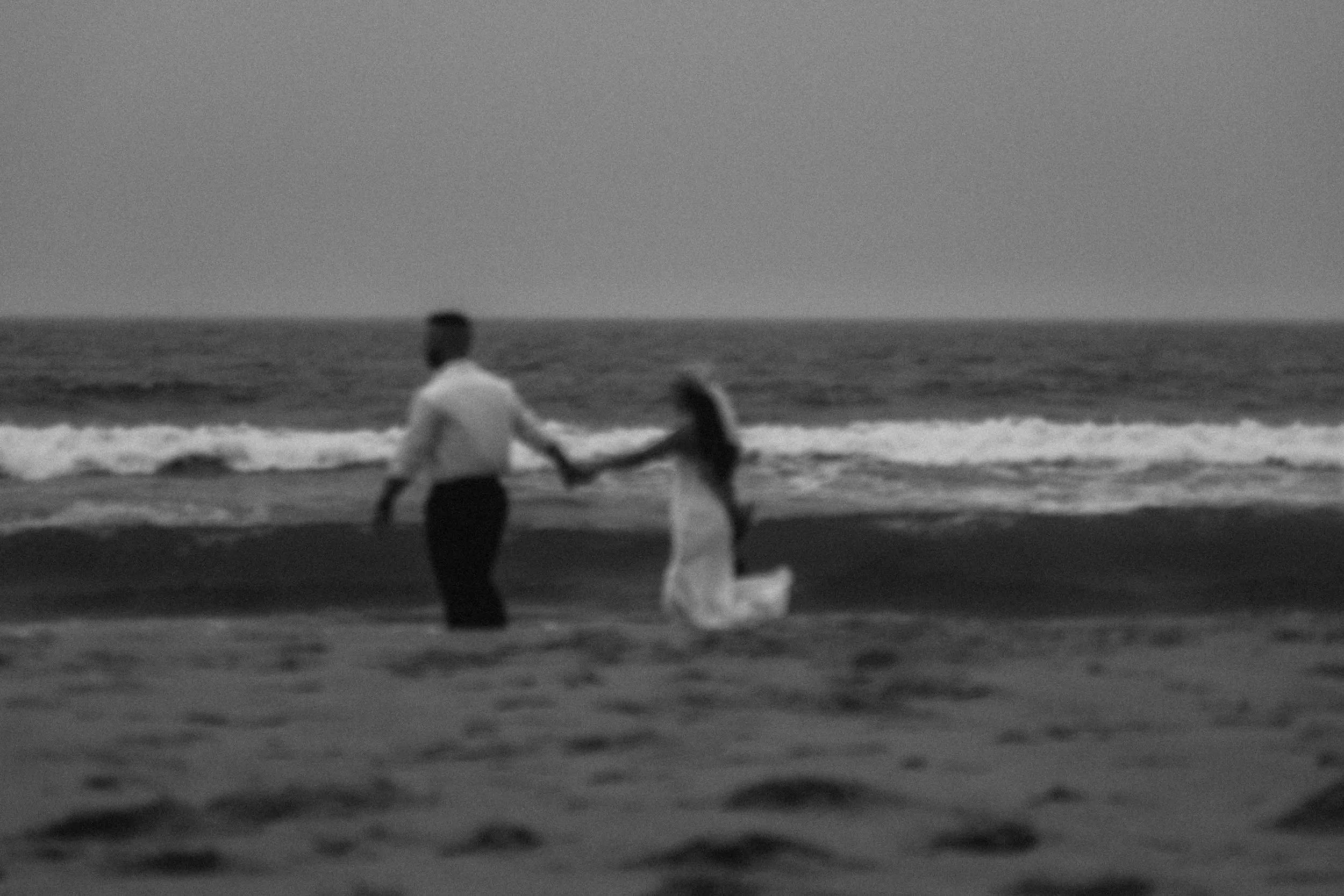
Film has a particular relationship with this environment. Sunlight, color, texture, and shadow become part of the photograph rather than simply elements to correct afterward. A veil moving through coastal wind, afternoon light falling across a courtyard, or a reception unfolding beneath warm practical lighting can each produce a different visual character.
The city keeps changing. The photographs should remember that.
The Character of 35mm Film
There is a difference between a photograph that resembles film and one made on an actual roll. It is not simply a matter of adding grain or shifting the colors in editing. Analog film responds to light through a physical photographic process, and that response gives the finished image a character of its own.
With 35mm film, the grain becomes part of the image. Color can feel layered and nuanced, highlights can transition with a distinctive softness, and small variations in exposure become part of the photograph’s personality. Different film stocks have different color responses and tonal characteristics. The choice of film matters, but so does the light falling on the subject and the decisions made behind the camera.
Los Angeles offers an interesting range of conditions for this process. Coastal haze, bright outdoor ceremonies, shaded gardens, architectural interiors, and evening celebrations all ask for different judgments. Strong sunlight can be beautiful, but it also demands attention to exposure. Indoors, available light may be limited, making the timing and placement of photographs particularly important.
Authentic 35mm film wedding photography in Los Angeles is not about making every image look identical. It is about working with the conditions rather than forcing them into a predetermined appearance.
I also work with digital photography. It provides flexibility across changing environments, fast-moving moments, and difficult lighting conditions. Film and digital serve different purposes, and they can complement each other throughout a wedding day.
Medium format film offers another perspective, with a larger negative and a different relationship to detail, depth, and composition. Each medium has its own strengths.
The aim is not to romanticize the equipment. It is to choose the right tool for the photograph, then allow the character of the image to remain visible.
Planning a Wedding Around the Light
A wedding photographed on film benefits from thoughtful planning, but it does not require the day to revolve around the camera. The most useful decisions are often small: understanding the light at the ceremony location, allowing enough time for portraits, and knowing how the different parts of the day will unfold.
Light and the Los Angeles Seasons
Los Angeles has a varied climate, but its light changes considerably with the season, location, and time of day. Coastal areas can carry marine haze and softer conditions, while inland locations may experience stronger direct sunlight and warmer afternoons.
Late afternoon often provides more forgiving light for outdoor portraits, particularly when the sun begins to lower. Midday ceremonies can still photograph beautifully, but open shade, architectural cover, and thoughtful positioning become more important.
Winter brings shorter days and an earlier sunset. Summer extends the available evening light, although the strongest afternoon sun can be demanding. The actual sunset time and conditions on the wedding date should guide the schedule rather than relying on a fixed golden-hour formula.
Choosing the Setting
Los Angeles offers an unusually broad range of photographic environments. Downtown architecture creates strong lines, reflective surfaces, and a sense of movement. Historic neighborhoods and older buildings introduce texture, courtyards, and quieter pockets of light.
Garden settings offer filtered sunlight and natural movement. Coastal locations bring open horizons, wind, changing skies, and the reflective quality of the ocean. Private estates and architectural properties can combine indoor and outdoor spaces, allowing the photographs to move between different atmospheres throughout the day.
The setting should reflect the celebration rather than simply provide a recognizable backdrop. A beautiful photograph does not always require a famous location. Sometimes the most interesting frame happens in an unexpected corner of the venue.
Planning Around Film
Film requires deliberate exposure decisions. Unlike digital photography, where an image can be reviewed immediately, a roll of film is exposed and developed before the finished frames can be evaluated.
That changes the rhythm of photographing a wedding. Light is assessed carefully, exposure is considered before each frame, and the photographer works with a degree of intention. It is not about slowing the wedding down or asking couples to repeat moments. It is about being prepared to recognize the photograph when it happens.
I recommend allowing enough time for portraits without making them dominate the day. A short window with beautiful light can be more valuable than an extended session in difficult midday conditions.
Film can be combined with digital coverage, allowing the two mediums to work together across ceremonies, portraits, receptions, and fast-moving moments. The balance depends on the wedding, the schedule, and the photographic approach.
Styling and Atmosphere
Film responds to color, texture, and light in ways that can make styling particularly interesting. Natural fabrics, subtle textures, considered color palettes, and architectural surroundings can all contribute to the character of the final photographs.
This does not mean everything needs to be neutral or minimal. Strong colors, dramatic styling, and unconventional details can work beautifully when they belong to the overall atmosphere.
Movement matters just as much. Fabric moving in coastal wind, a jacket falling naturally across a shoulder, or guests crossing a sunlit room can create photographs with a sense of life that carefully arranged details cannot reproduce.
Caz Isaiah’s Perspective
I approach film as part of the photographic process, not as a decorative effect. I pay attention to the available light, the movement around me, and the character of the setting. Sometimes that means making a deliberate portrait. Other times it means recognizing a moment and allowing it to unfold without interruption.
The intention is never to make the wedding feel like a film production. It is to make photographs that carry the atmosphere of the actual day.
The Photographs That Take Their Time
There is something particular about receiving photographs made on film. The images have already passed through several stages before they arrive in your hands. The roll has been exposed, developed, scanned, and brought back into view. What began as a series of decisions made throughout a wedding day becomes a collection of finished frames.
A Los Angeles 35mm film wedding photographer is working with a medium that asks for a different kind of attention. There is no instant review of each exposure. The photographer must understand the light, anticipate movement, and trust the decisions made in the moment.
For couples, the experience should still feel natural. You are not expected to understand film stocks, exposure settings, or camera mechanics. You should be able to be present with each other, with your families, and with the people who have come to celebrate.
There may be a few moments of direction when the setting or light calls for it. There may also be long stretches when the best photographs come from simply allowing things to happen. A quiet exchange before the ceremony, a crowded dance floor, the movement of a dress through a doorway, or the last light falling across an outdoor reception can all become part of the story.
Film and digital bring different qualities to the finished collection. One offers the distinctive physical character of analog photography; the other offers flexibility across the changing pace of a wedding. Together, they can create a broader account of the day without forcing every photograph into one visual treatment.
The final photographs should not feel like a collection of poses performed for a camera. They should bring back the places, people, light, and small details that made the day yours.
Some photographs will be composed. Others will be found. The best collection has room for both.
The Art of Knowing When to Expose
Working with film changes the relationship between the photographer and the moment. There is no endless sequence of exposures to sort through later. Each frame begins with a decision about light, distance, timing, and composition.
I have always been drawn to photographs that carry a sense of movement. A person turning toward the light, a passing expression, the space between two people, or the atmosphere of a room as the evening changes. These are often brief moments, and they require attention before they disappear.
With 35mm film, that attention becomes especially important. I consider how the light falls, how the colors interact, and where the subject sits within the frame. Sometimes the strongest image comes from a carefully arranged portrait. Sometimes it comes from stepping back and allowing the scene to develop naturally.
Los Angeles offers no shortage of visual possibilities, but the location alone does not make the photograph. The camera, the film, the light, and the person behind the lens all contribute to the result.
I use film because I value its physical character and the way it encourages a deliberate approach. I use digital because some moments and conditions call for its flexibility. Neither medium needs to compete with the other.
The aim is always the photograph itself: something with atmosphere, character, and a connection to the moment that existed in front of the camera.
Not every frame needs to be perfect. Sometimes the photograph is more interesting because it isn’t.
About Me
I’m Caz Isaiah, a Los Angeles-based photographer drawn to the character of real 35mm film, cinematic light, and moments that unfold naturally. My approach blends analog film with digital photography, bringing together documentary observation and considered direction.
I photograph weddings with an appreciation for the grain, color, movement, and imperfections that make film distinctive. From the California coast to city streets and celebrations across the world, I’m interested in photographs that carry the atmosphere of the place and the feeling of being there.
Explore more of my work and story on my About Me page.